Our plans for September and October changed several times as we navigated supply chain delays related to semiconductor chip shortages. We knew we’d be lucky to get our hands on an Airstream in anything less than 6 months, and we were overjoyed to hear that ours had left Jackson Center, Ohio and arrived at our dealer in New Jersey by the end of September. Our Ford truck, however, got stuck in Dearborn, Michigan on “chip hold” in September, and we nervously waited for updates (calling our Ford dealer weekly) until we finally received the news that it was headed our way and slated to arrive in mid October. In the space of ten days, we picked up our truck and Airstream, packed what relatively little we needed and put the rest of our possessions in storage, and hit the road. With the warm summer camping months largely over for the year, we had to bypass Colorado and some higher-elevation places for now — we’ll circle back this winter for ski season!


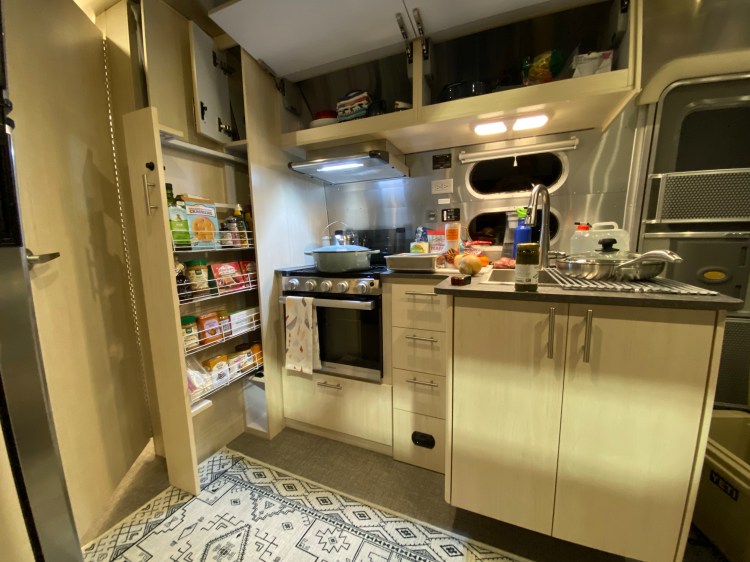

In mapping out an itinerary, we also had to balance our needs to work, to meet our kids’ intellectual and academic needs, maintain a schedule that includes things like weekly instrument lessons and church and orthodontist appointments, and to have enough time to rest that we could enjoy the ride. Because this is 7 months of our regular lives, and not a vacation, we realized early on that we couldn’t go at the same pace as we would for a 2-week trip. Also, we wanted to get a chance to really live in the places we’d visit — avoid the temptation to check them off. It was hard to miss some of the beautiful spots our drive brought us within striking distance of (Great Sand Dunes National Park, Mesa Verde National Park, Canyon de Chelly and other spots in the Navajo Nation, Canyonlands National Park…) but we’ve realized you can spend a lifetime traveling and not see it all. We’ve learned to say with total contentment: “We’ll see it on our next trip!” In fact, there’s some comfort knowing that we aren’t done traveling; we’ll never have nothing left to wonder about.
So, when we left Connecticut in late October, as the weather quickly cooled, our goal was to get out West to warmer weather in a short but reasonable timeframe. Our first planned stop was Philadelphia for a squash tournament, then on to Taos. Along the way, we hoped to show the kids the middle of the country. Because of Emma’s interest in midcentury architecture, we stopped at Frank Lloyd Wright’s Fallingwater estate in the rolling Laurel Highlands of SW Pennsylvania just outside Pittsburgh – which was a beautiful but harrowing drive for our early days towing the trailer due to winding country roads and steep grades. We toured the outside of the house and grounds and enjoyed a memorable meal at the treehouse-like restaurant there. We’d spent the previous night sandwiched cozily between two semi trucks at a truck stop off Highway 76. We were exhausted but happy as our travel year of exploration and adventure was finally underway, and it was just as crazy but doable as we’d imagined!


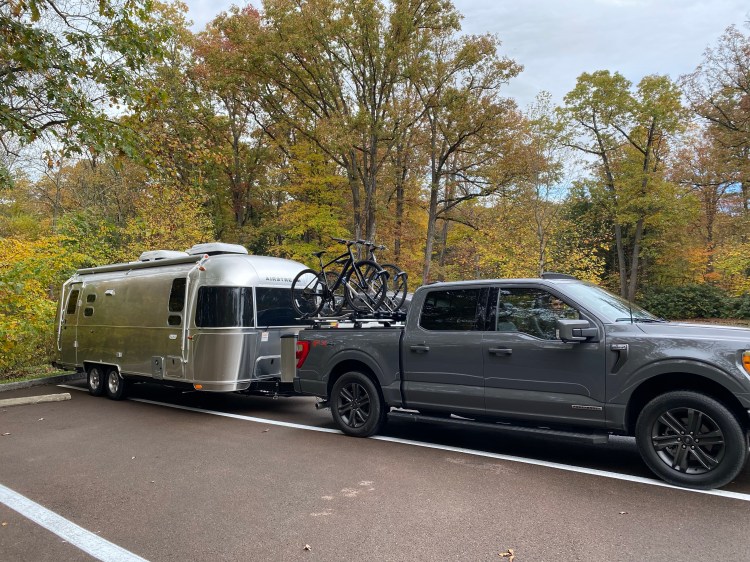
While our original itinerary dictated a more leisurely pace with stops in Ohio, Missouri, Kansas, and Colorado, the delays in getting our rig and the onset of colder weather (and our desire to get to one place and stay awhile) dictated a less forgiving pace. We did the drive in three 10-hour days, about 600 miles each day, overnighting in truck stops (our favorite) or Wal-Mart parking lots (did you know that Wal-Marts are an established overnight haven for RVers and truck drivers crossing the country?).
The drive got long in about Kansas, which is the windiest place we’ve ever been. We occupied our time with school and work and podcasts and music and books that helped us to imagine what it would have been like to inhabit the Great Plains during the Dust Bowl, during the Westward Expansion, and during the pre-columbian millenia. We read the young reader’s version of The Omnivore’s Dilemma, by Michael Pollan, which really made an impression on the kids and helped us understand how agriculture has shaped the Great Plains and affected the fortunes of the farming families who’ve eked out a living there since the late 1800s (and made them more skeptical of the government and of corn). We also read The Grapes of Wrath and Out of the Dust (the kids hated the latter).
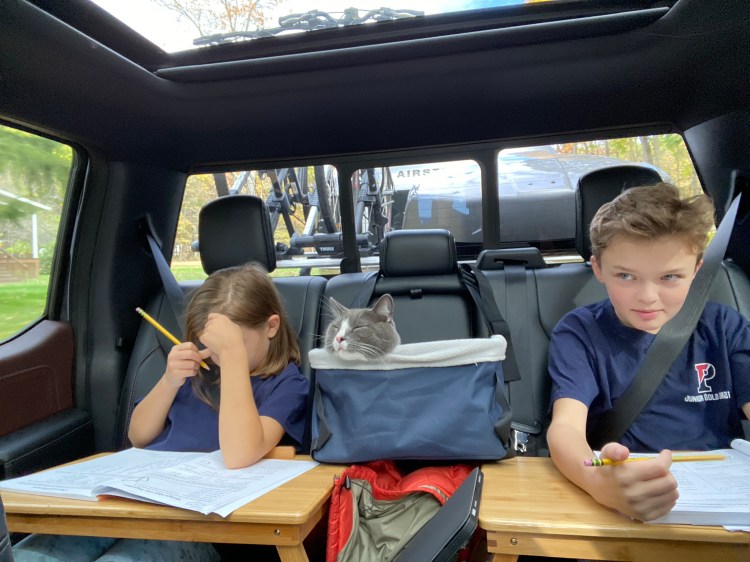

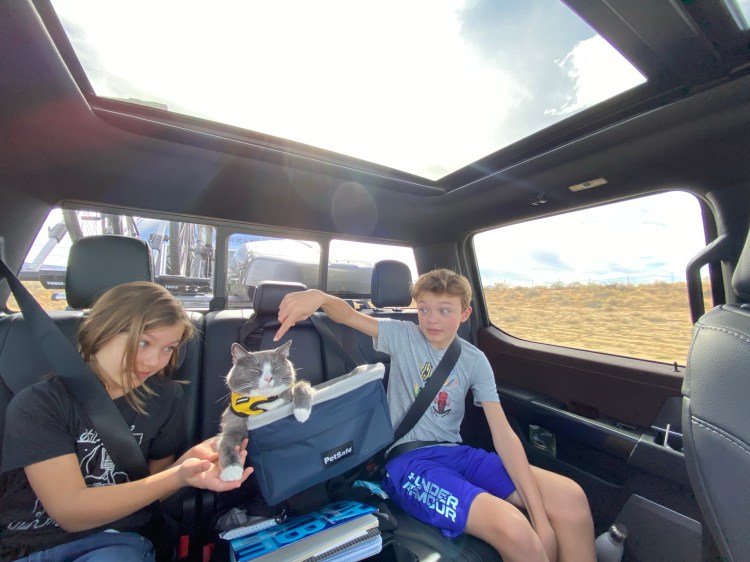
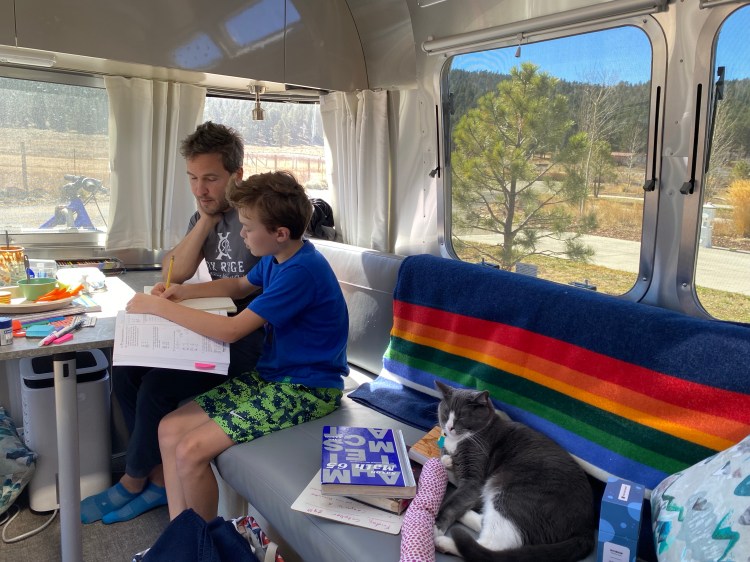
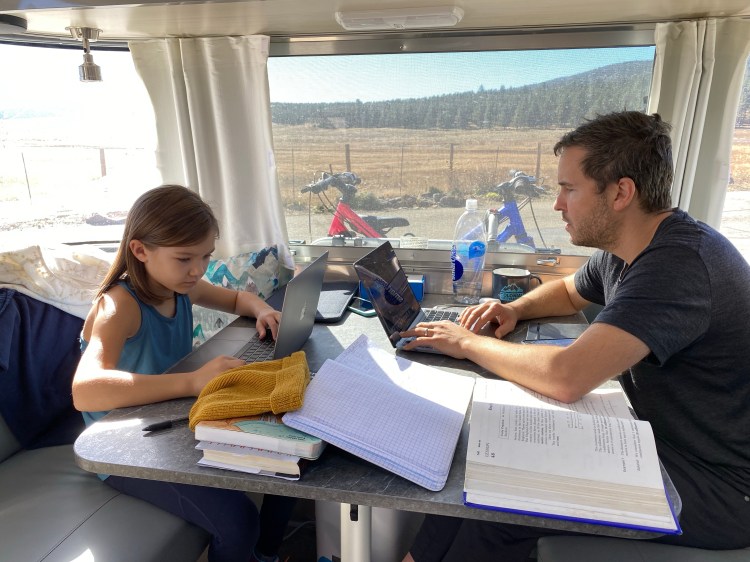


Here’s a glimpse of our cross-country journey from Emma’s perspective:
The long drive west….
The West is very different from the East Coast where we live, and we just read “The Omnivore’s Dilemma,” by Michael Pollan, so we know a little bit about feedlots vs. good, moral farms. We saw some of both, feedlots packed perilously with cows; moral farms with rolling rural hills, with miles of wooden fencing, and cows dotted about over the hillsides. The whole way there the sun shone through clumps of trees and cotton plants. There were even tumbleweeds when we stopped for lunch and my piano lesson in Kansas, which Graham and I took the time to spot, chase, collect, spot, chase, collect, until our plastic grocery bag was filled with them. Then they aggregated together, forming a big ball of tumbleweed which would easily blow away if wind blew it. This ability to ride on the wind is part of the tumbleweed’s life cycle, as it helps the tumbleweed plant to spread its seeds. We brought the bag containing our tumbleweed in the airstream, secured everything, and got back in the truck to resume our drive to New Mexico.

 The Peace of Wild Things